
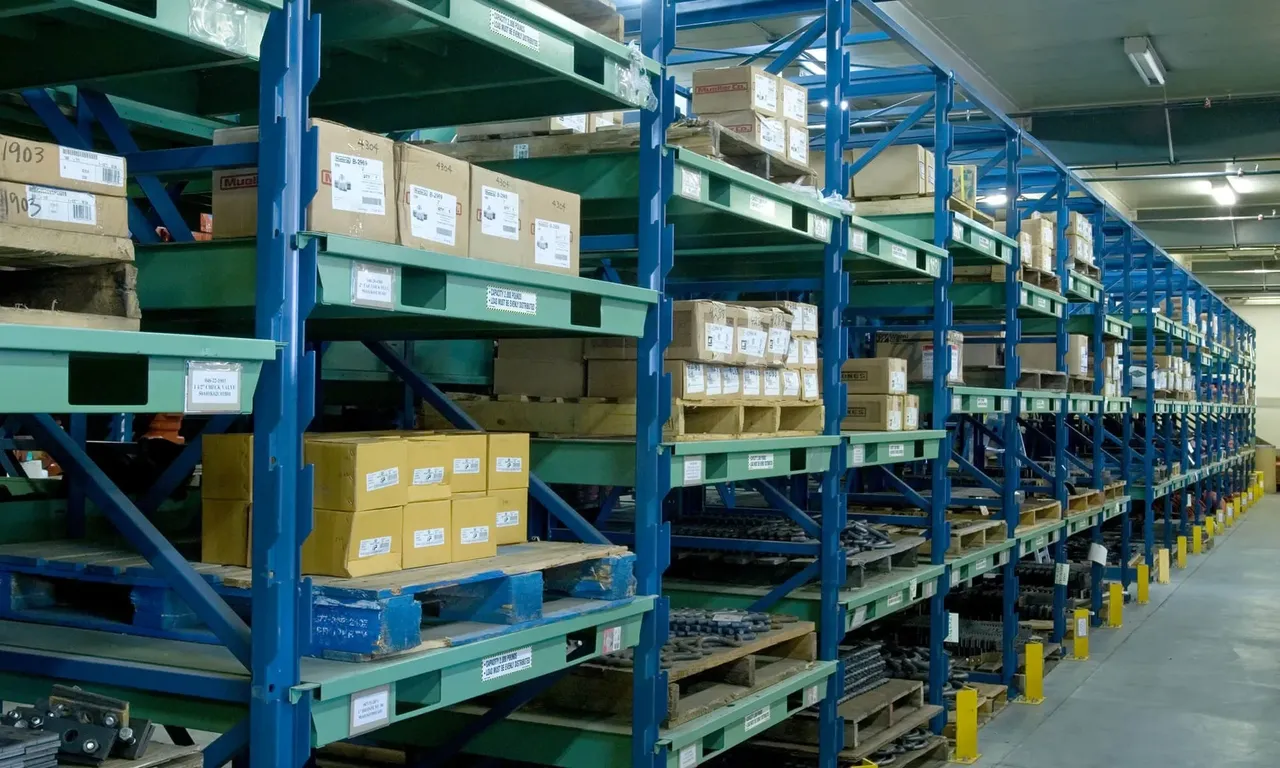
You might think there's no difference between racks and shelving, but you'd be wrong. These terms mean two very different things. Understanding the rack vs. shelf distinction is essential for safety, efficiency, and long-term scalability in any workspace.
Each system is designed for different loads, structures, and environments. Choosing the wrong system can lead to safety concerns and costly adjustments later.
At a high level, racking refers to heavy-duty storage designed to support palletized or oversized items. These systems are engineered to carry significant loads and are commonly used in warehouses and large industrial facilities.
Shelving, on the other hand, is a lighter-duty storage solution intended for smaller items that can be loaded and retrieved by hand. Shelving units typically consist of multiple tiers and are widely used in workshops, offices, and maintenance areas.
Because both systems store materials vertically, people often confuse them. However, the difference between racks and shelves lies in their structure, load capacity, and intended use. Picking the right one can ensure that storage remains safe and efficient. It also means you'll create a more organized system that's better positioned for future expansion.
What Is Storage Racking Used For?
Storage racking systems are designed for environments that require high-capacity, industrial-grade storage. Think: warehouses, distribution centers, manufacturing floors, and automotive facilities.
Racking systems are built to support heavy or bulky loads, like palletized inventory. Forklifts and other material-handling equipment are typically used to place and retrieve items from racks, allowing facilities to store large quantities of goods safely and efficiently.
One of the main advantages of racking is the ability to maximize vertical space. Warehouses often install tall racking structures that allow businesses to store materials several levels high. This design helps organizations increase storage capacity without expanding their facility footprint.
Industrial racking systems typically come with strict load ratings. These ratings ensure that the structure can support the intended weight without compromising safety. When used correctly, racking systems provide reliable support for heavy inventory and equipment.
In addition, many industrial environments must comply with safety standards and inspection requirements. Properly designed racking systems help facilities meet these standards while maintaining organized storage.
For companies managing palletized goods or heavy materials, a warehouse racking system is often the only practical solution.
What Is Shelving Used For?
While racking handles large and heavy loads, shelving systems are designed for smaller items that employees can access by hand.
Shelving is widely used in offices, workshops, maintenance departments, and even specialized environments such as labs. In these spaces, workers frequently retrieve tools, supplies, or components throughout the day. That means items need to be within arm's reach, rather than stored near roof rafters. You shouldn't need a forklift to reach a shelf.
In general, shelving systems also are more flexible in design. Many units can be modular, mobile, or mounted to walls depending on the space requirements. For example, some facilities use wall-mounted storage systems to maximize space while keeping frequently used items within easy reach.
Compared to racking, shelving typically has a lower load capacity and a shorter overall height. However, these characteristics make shelving well suited for day-to-day storage in commercial and light industrial environments.
Organizations looking for durable workspace storage often incorporate professional shelving solutions into their facility layouts to maintain organization and improve workflow.
Rack vs. Shelf: Load Capacity, Size, and Structural Differences
When evaluating shelving vs. racking, the most important factor is load capacity.
Racking systems are engineered to support significantly heavier loads than shelving. They are built with reinforced upright frames and heavy-duty beams designed to carry palletized inventory or large equipment.
Shelving systems, by contrast, rely on lighter structural supports. They are intended for smaller and lighter items such as boxes, tools, or other parts.
The structural design of each system also differs. Racking typically consists of tall upright frames connected by horizontal beams that support pallets or platforms. These systems are often anchored to the floor and designed to handle static loads over long periods.
Shelving systems, constructed with shelf standards or modular frames, usually support individual tiers. Because these systems are lighter and more compact, they are easier to rearrange or relocate when storage needs change.
Just don't overload a shelf. If you place heavier items intended for racking on a shelf, you might be faced with structural failure. This can cause a workplace hazard. Understanding the difference between racks and shelves helps organizations avoid these risks.
Ultimately, the decision in the rack vs. shelf comparison should always be guided by the weight and size of the items being stored.
Choosing Between Racking and Shelving for Your Facility
Selecting the right storage system requires careful evaluation of how materials move through your workspace. To decide which system to use, ask these important questions:
What type of item is being stored?
Heavy or palletized inventory typically requires racking, while smaller items that employees access frequently are better suited for shelving.
What are the weight and size of these items?
Storage systems must support the load without compromising safety. Choosing the appropriate system ensures the storage structure performs reliably over time.
How often do employees need to access these items?
If workers need constant access to tools, parts, or supplies, shelving systems allow for faster retrieval. Racking systems are more appropriate for bulk inventory that is accessed with forklifts or equipment.
What's the facility layout?
Facility layout also plays a role. Businesses must consider both floor space and vertical storage capacity when designing storage areas.
In many cases, the best solution is a combination of both systems. Racking can store bulk inventory, while shelving supports day-to-day operational supplies.
Some facilities integrate shelving with complementary components such as cabinets and durable countertops to create efficient workstations and organized storage zones. Being intentional about which systems you implement can improve workflow efficiency while maintaining safe operations.
Common Mistakes When Comparing Rack vs. Shelf Systems
When evaluating rack vs. shelf storage options, businesses sometimes make decisions based solely on initial cost. The cheaper approach isn't always the best one, and often leads to problems later.
One common mistake is selecting shelving systems for loads that require racking. While shelving may appear less expensive at first, it is not designed to support heavy inventory. Using the wrong system can create safety risks for employees. Not to mention if a shelf breaks, you may have to replace a costly tool or shelving system.
Another mistake is failing to consider future growth. Storage systems should accommodate expansion as inventory levels increase. Facilities that install undersized shelving may find themselves needing to redesign their storage layout sooner than expected.
Access methods are another overlooked factor. Systems must be compatible with the equipment used in the facility. Racking systems are often designed to be used in conjunction with forklifts, so you'll need the space to accommodate them.
Compliance and safety are also critical considerations. Improperly designed storage systems can create hazards or fail to meet workplace safety standards.
Finally, many organizations neglect to plan for reconfiguration. Businesses evolve, and storage systems must adapt. Systems that cannot expand or adjust may limit operational flexibility.
Understanding the difference between racking and shelving helps decision-makers avoid these pitfalls and invest in storage solutions that support long-term operations.
How HDCI Helps Design the Right Storage Solution
Choosing between racking and shelving is rarely a one-size-fits-all decision. Every facility has unique workflows, storage requirements, and operational goals.
HDCI approaches storage planning as a partnership rather than simply providing products. The company works with organizations to understand how materials move through their facilities and how storage systems can support those processes.
Instead of relying on standard layouts, HDCI designs customized solutions that integrate multiple components. These systems may include shelving, cabinets, countertops, and other storage systems.
This consultative approach helps businesses develop scalable systems that grow with their needs. From warehouses to industrial settings, organizations benefit from racking or shelving that are engineered for durability and long-term performance.
By combining professional design expertise with high-quality products, HDCI delivers complete storage systems tailored to each facility.
Organizations that want help determining the right rack vs. shelf configuration can also request guidance from HDCI's storage experts.
The right storage system improves organization, enhances safety, and supports efficient workflows. Understanding the difference between racks and shelves is the first step toward building a storage environment that works well today and scales for the future